AI for Climate Adaptation and Disaster Response: Public Sector Pathways to Impact
A panel conversation on AI tool implementation in California's public sector

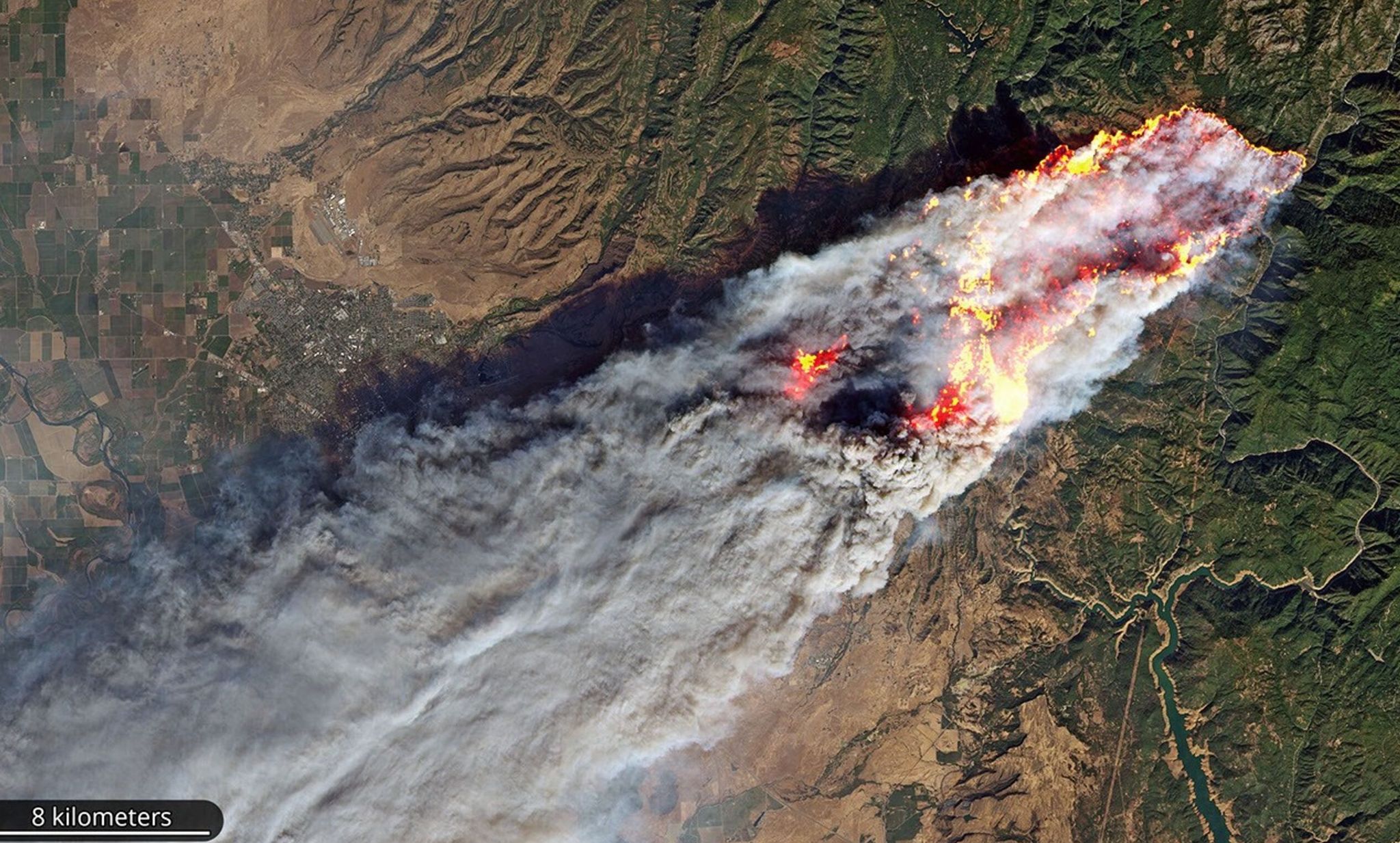
On April 22, 2026, Climate Change AI hosted a panel discussion at the San Francisco Bay Area Planning and Urban Research Association as part of SF Climate Week 2026. The conversation brought together senior leaders from California’s public health, emergency management, and technology infrastructure alongside a practitioner from the private sector, to examine what responsible, equitable AI deployment for climate adaptation and disaster response looks like, and what stands in the way.
Panelists
Amy Tong, California Racial Equity Commissioner; Former Senior Counselor to Governor Newsom; Former Secretary, California Government Operations Agency
Mark Ghilarducci, Former Director, California Governor’s Office of Emergency Services (Cal OES)
Dr. Karen Smith, Former California State Public Health Officer and Director, California Department of Public Health
Jen Carter, Global Head of Technology, Google.org
About the conversation
The panel opened with a framing from moderator Sarah Skenazy on critical questions to ask when developing and implementing machine learning and other artificial intelligence tools in public sector contexts. Building on the OECD’s definition of an AI system as a machine-based system that infers from input how to generate outputs, the audience was encouraged to replace the term “AI”, wherever relevant, with “automation” to help sharpen their questions towards equitable tool creation and evaluation, such as: What is being automated? By whom, and why? Who benefits? Who could be harmed?
From there, the conversation moved through three areas:
The state of the field.
Mark Ghilarducci traced the fragmentation that characterizes disaster response systems in California today — siloed data, under-resourced local governments, and the gap between innovation and what agencies actually need on the ground. Amy Tong described the challenge of moving from pilot to practice inside government procurement systems designed for a different era, and introduced the PHNIX initiative — California’s Public Health Network Innovation Exchange — as an example of a new model for accelerating AI deployment in public health, particularly as federal data sharing capacity contracts.
How lessons from public health can help guide co-design with communities most impacted by climate change.
Dr. Karen Smith drew on decades of practice in local and state public health to argue that the most important lessons for AI practitioners today aren’t about technology, but about community — and how to build trust over time. No two communities are the same and resilience factors and civic engagement levels matter as much as vulnerability indicators. Precision public health requires asking communities what they want before deciding what they need. And wastewater surveillance, social determinants data, and the emerging analytics tools now available for the first time give public health a genuine shot at the kind of integrated, community-level analysis that has long been out of reach.
The role of philanthropy and the private sector as risk capital and bridge.
Jen Carter described Google.org’s approach as one of problem-first, not technology-first — using the example of SKAI, a satellite-based building damage detection model developed with GiveDirectly, to illustrate how AI can do something categorically different from efficiency gains: it can change who gets aid and how quickly. She also outlined a framework for responsible AI deployment that runs from data equity through model transparency to human-in-the-loop decision-making, and encouraged applying the disability rights movement’s principle: “nothing about us without us.”
The conversation closed with each panelist naming one concrete thing the audience could do: Jen Carter encouraged starting with a real domain-specific problem to ensure that domain experts are guiding pathways to impact, rather than leading with a technological capability and problem matching after the fact. Karen Smith provoked the room to consider seriously how AI can be used to fundamentally increase societal equity at the population scale. Amy Tong called for more grounded, specific education about AI that moves people from cycles of hype and fear toward concrete use cases. And Mark Ghilarducci encouraged everyone to go back to their organizations, pick one problem area, and try something — then compare what you thought you knew to what you learned.
Recording
The full recording of the panel is available on the SPUR website.
About the organizers
This event was organized by CCAI Bay Area core team members Sarah Skenazy (Public Health Lead) and Utkarsha Agwan (Organizational Development & Sponsorships) and hosted by SPUR in San Francisco, with support from Watershed Progressive.